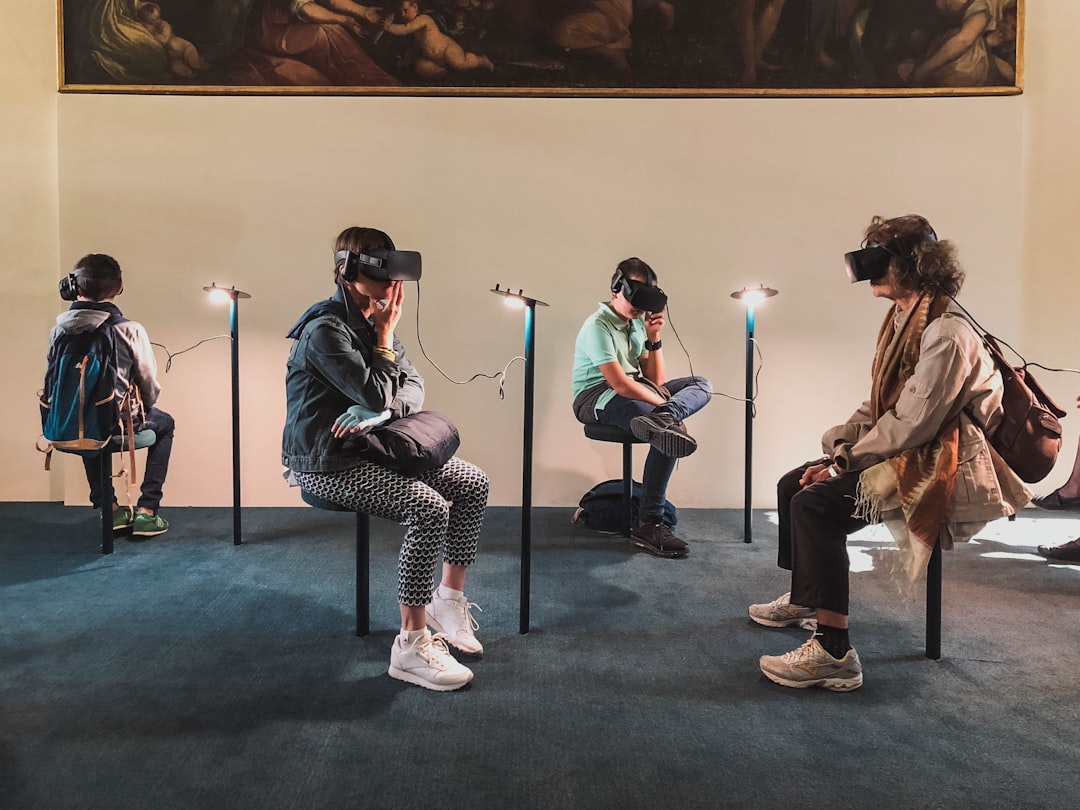
The Metaverse in Corporate Learning: A New Frontier In recent years, the metaverse in corporate learning has undergone a remarkable transformation. At first, the idea of the metaverse was mainly limited to social interaction and gaming. But as technology developed, we realized how useful it could be for teaching. New opportunities for immersive learning have been made possible by the incorporation of virtual environments into corporate training programs. Traditional classroom environments are giving way to dynamic, interactive platforms where staff members can interact with content in previously unthinkable ways.
Thanks to technological developments like virtual reality (VR), custom digital training (AR), & artificial intelligence (AI), the metaverse has become more than just a concept. Thanks to these technologies, we can now create rich, immersive environments that mimic real-world situations. We are at the vanguard of a new era in corporate learning as we embrace this evolution, where workers can hone their skills, work together with coworkers, & investigate difficult ideas in a secure setting. This development not only improves education but also meets the demands of a contemporary workforce that prioritizes adaptability & creativity. Unquestionably, the COVID-19 pandemic has sped up the adoption of digital solutions in a number of industries, including corporate education.
In exploring the relevance of the Metaverse for corporate learning, it’s essential to consider how innovative training methods can enhance employee development. A related article discusses the advantages of training simulations for HR departments, highlighting their effectiveness in providing immersive learning experiences. For more insights on this topic, you can read the article here: How HR Departments Can Benefit from Training Simulations.
The importance of the metaverse became clear as businesses were compelled to switch to remote work. We had to find other ways to keep employees engaged and retain their knowledge because we were navigating a situation where traditional training methods were no longer practical. With its immersive experiences that could mimic face-to-face interactions, the metaverse has become a promising alternative. Investment and interest in metaverse technologies increased dramatically during this time.
Businesses started looking into virtual training environments that let staff members communicate and work together even when they were geographically separated. The pandemic brought attention to the value of flexibility and creativity in corporate education, and the metaverse gave businesses a chance to reconsider their training approaches. It became evident as we adjusted to this new normal that the metaverse was a long-term plan for improving corporate learning rather than merely a short-term fix. There are numerous benefits to using the metaverse in corporate training that can greatly improve the educational process.
The ability to develop immersive simulations that let staff members practice skills in authentic situations is one of the most noteworthy advantages. Because we can interact with the material in a way that traditional approaches frequently fall short of, this hands-on approach promotes deeper comprehension and knowledge retention. The metaverse also encourages teamwork among workers by allowing them to collaborate in virtual settings regardless of where they are physically located. But we also need to recognize the difficulties in incorporating the metaverse into corporate training initiatives. The initial cost of infrastructure and technology is one major obstacle. It can be intimidating for some organizations to have to commit significant resources to the development or acquisition of VR and AR tools.
In exploring the relevance of the Metaverse for corporate learning, it is interesting to consider how custom digital training can enhance employee training experiences. A related article discusses the innovative use of custom digital training in resource management training, showcasing how immersive technologies can engage employees more effectively. This approach not only complements traditional learning methods but also highlights the potential of virtual environments in fostering skill development. For more insights on this topic, you can read the article on custom digital training and employee training.
Also, these technologies have a learning curve; in order for employees to successfully navigate virtual environments, training may be necessary. As we proceed, we must overcome these obstacles and take advantage of the benefits that the metaverse provides. We can examine a number of case studies that demonstrate effective integration to gain a deeper understanding of the potential of the metaverse in corporate learning. Walmart is a prime example, having adopted virtual reality for staff training. VR simulations were used by the retail behemoth to instruct staff members on customer service scenarios and operational protocols.
In exploring the relevance of the Metaverse for corporate learning, it’s essential to consider various innovative approaches that enhance employee engagement and knowledge retention. One such approach is gamification, which has proven effective in transforming traditional training methods into interactive experiences. For further insights on this topic, you can read about how gamifying corporate training can boost engagement in this informative article. To learn more, visit gamifying corporate training.
This creative strategy raised staff members’ confidence levels in addition to enhancing worker performance. Walmart has shown how the metaverse can improve training outcomes by putting staff members in authentic scenarios. Accenture’s use of the metaverse to promote teamwork among its international employees is another strong example. Employees can attend meetings, take part in workshops, & participate in team-building exercises on the company’s virtual campus.
During a period when remote work was common, this initiative has strengthened company culture and enhanced communication. Accenture has demonstrated to us how businesses can foster a feeling of community & belonging among workers, regardless of their geographical locations, by utilizing the metaverse. Enhancing employee engagement & retention is one of the biggest benefits of using the metaverse in corporate learning. Employee disengagement and high turnover rates result from traditional training methods’ frequent inability to hold employees’ attention.
Immersion experiences in the metaverse, on the other hand, can captivate students by offering interactive content that promotes engagement. We become more engaged in our educational journeys as we interact with simulations and virtual environments. Also, by providing opportunities for social interaction and teamwork, the metaverse helps employees feel like they belong. By connecting with coworkers from various departments or locations, virtual spaces help to dismantle the silos that frequently exist in traditional workplaces. In addition to increasing engagement, this sense of community helps employees stay with the company longer because they feel more a part of it.
We can develop a workforce that is driven and dedicated to their jobs by putting an emphasis on engagement through creative training techniques. Custom digital training (AR) and virtual reality (VR) are key components in creating the metaverse for business education. We can develop immersive experiences that go beyond conventional training techniques thanks to these technologies. Employees can practice skills & engage with digital components as if they were in real life by using virtual reality (VR) to transport them into fully realized virtual environments. Experiential learning that improves knowledge retention and application is made possible by this degree of immersion. Conversely, AR enhances VR by superimposing digital data on the actual environment.
When it comes to on-the-job training, where workers can access real-time guidance while completing tasks, this technology can be especially helpful. For example, AR can facilitate hands-on learning without interfering with workflow by placing visual cues or step-by-step instructions right within an employee’s field of vision. Utilizing VR and AR in the metaverse opens up new corporate training opportunities that accommodate a variety of learning preferences & styles. The future of the metaverse in corporate learning is expected to be shaped by a number of emerging trends and innovations.
The incorporation of artificial intelligence (AI) into virtual training environments is one new trend. By evaluating individual performance data and modifying content accordingly, AI can customize educational experiences. This degree of personalization guarantees that workers receive specialized training that fills in their skill gaps and particular needs. We also expect a rise in the metaverse’s collaborative learning opportunities. Collaborative projects and virtual team-building exercises will proliferate as more businesses adopt remote work.
Employee creativity and innovation will be stimulated by these experiences, which will also improve teamwork. We can develop dynamic learning environments that change to meet the demands of our workforce by utilizing new trends and technologies. In order to optimize the advantages of the metaverse in corporate training, we must follow best practices that guarantee successful execution. Prior to investing in metaverse technologies, it is crucial to evaluate the unique training needs of our organization.
We can adjust our strategy to match our objectives by determining skill gaps and desired results. Involving staff members in the design process is also essential for promoting engagement and buy-in. We can design experiences that align with learners’ preferences and learning styles by asking for feedback from them throughout the development process. Employees’ concerns about utilizing virtual environments can also be allayed by offering them continuous assistance & resources as they learn new technologies.
In conclusion, as we continue to investigate the metaverse’s potential for corporate learning, it is evident that this cutting-edge strategy has many benefits but also poses difficulties that need careful thought. We can develop interesting & successful training programs that equip our employees for success in a constantly shifting environment by embracing this evolution and putting best practices into practice.