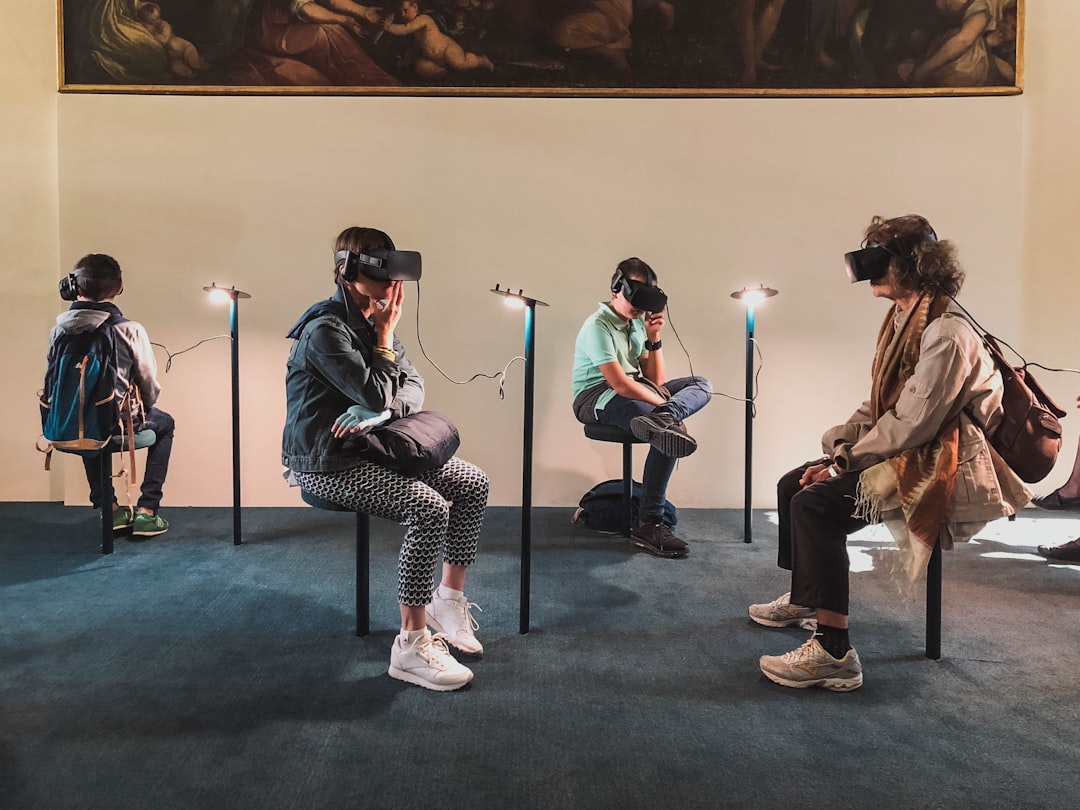
The Transformative Power of Training Simulations: A Complete Overview Organizations are increasingly using training simulations as a potent tool for employee development in the quickly changing corporate training landscape. Employees can practice skills and make decisions in a secure setting by participating in immersive, interactive training simulations that mimic real-world situations. From straightforward role-playing games to intricate virtual worlds that replicate real-world workplace settings, these simulations can take many different forms. Training simulations are a priceless tool for companies trying to improve their training initiatives because of their adaptability and potency. The development and application of training simulations have been greatly impacted by the advancement of technology. Thanks to developments in gamification, custom digital training (AR), & virtual reality (VR), businesses can develop training programs that are both realistic and extremely engaging.
This change not only accommodates employees’ varied learning styles, but it also meets the need for real-world, hands-on training that is frequently absent from conventional approaches. As we learn more about the advantages of training simulations, it becomes evident that they represent a fundamental change in how businesses approach employee development rather than merely a passing fad. Increasing employee engagement is one of the biggest benefits of training simulations.
Conventional training techniques, like lectures and PowerPoint presentations, frequently result in passive learning environments where workers may find it difficult to concentrate. Training simulations, on the other hand, actively involve participants, motivating them to interact with the content and use their knowledge in real-time. Employees become more committed to their own growth as a result of this hands-on approach, which encourages a sense of ownership over the learning process.
Also, higher retention rates may result from improved engagement through training simulations. Employees are more likely to remember the knowledge & abilities they have acquired when they feel a sense of connection to their training. In today’s competitive job market, where companies aim to retain top talent, this is especially crucial. Businesses that invest in engaging training techniques not only improve the skills of their staff but also foster a positive workplace culture that promotes loyalty and lowers turnover. Employees have a special opportunity to improve their decision-making & problem-solving abilities through training simulations.
Participants are presented with realistic challenges in a simulated setting that call for critical thinking & well-informed decision-making. Employees can practice handling challenging circumstances without worrying about the repercussions in the real world thanks to this experiential learning strategy. They gain a greater comprehension of the consequences of their choices as they interact with these situations. Also, training simulations can be customized to represent particular difficulties encountered by a company or sector.
This personalization guarantees that workers are not only picking up general problem-solving skills but also using them in contexts that are pertinent to their jobs. Employees who participate in these simulations are therefore better prepared to handle obstacles in the real world, which improves performance and boosts self-confidence. The time and expense involved in onboarding and training new hires can be greatly decreased by implementing training simulations. Time spent in classrooms, printed materials, and travel costs for off-site training sessions are just a few of the many resources that traditional training methods frequently call for.
On the other hand, training simulations can be provided in-house or online, reducing related expenses and logistical difficulties. Also, training simulations let new employees learn at their own speed. Workers don’t have to worry about keeping up with a group because they can review scenarios as needed to reinforce their understanding. In addition to speeding up the onboarding process, this flexibility guarantees that workers are suitably prepared for their positions before they start working independently. Organizations can more efficiently allocate resources and concentrate on other crucial areas of development by optimizing training initiatives. Training simulations are essential for improving safety procedures & risk management techniques in sectors like healthcare, manufacturing, and aviation where safety is of utmost importance.
Employees can practice safety procedures and emergency response techniques without endangering themselves or others by simulating high-stakes scenarios. Employees are better prepared for real-life scenarios where prompt decision-making and quick thinking are crucial thanks to this practical experience. Also, companies can find possible hazards and areas where their safety procedures need to be improved by using training simulations. Businesses can identify shortcomings in their present procedures & carry out focused training interventions by evaluating employee performance during simulations.
In addition to improving worker safety, this proactive strategy fosters an organizational culture of continuous improvement. Also, the quality of customer service and general customer satisfaction can be significantly impacted by training simulations. Organizations can give employees the skills they need to effectively handle a variety of customer scenarios by immersing them in realistic customer interactions through simulations. Workers receive training in effective communication, conflict resolution, and outstanding customer service—all crucial elements of a satisfying client experience. Also, well-trained staff members are more assured of their capacity to meet client needs, which raises client satisfaction.
Employees are more inclined to go above and beyond in their service delivery when they feel equipped to handle consumer questions or complaints. The company’s reputation in the market is strengthened by this dedication to quality, which also increases customer loyalty. Employee productivity and general performance can be significantly increased by using training simulations. Organizations can make sure that workers are ready for their jobs by giving them chances to hone their skills in a safe setting. As workers become more skilled at finishing tasks and resolving issues on the job, this preparation results in increased efficiency.
Also, training simulations promote an ongoing learning culture in businesses. Regular participation in simulation-based training increases the likelihood that staff members will remain current with market trends & best practices. This dedication to continuous improvement not only improves individual performance but also helps the company succeed as a whole by cultivating a workforce that is flexible and agile in the face of change. Even though the initial outlay for training simulations might seem high, the long-term financial gains greatly exceed the expenses. Businesses that place a high priority on providing efficient employee training through simulations frequently experience a substantial return on investment (ROI) over time.
Increased productivity, lower attrition rates, and higher customer satisfaction are all results of improved employee performance, all of which boost profitability. Also, companies can lower expenses related to mishaps or errors by reducing errors and enhancing safety procedures through simulation-based training. The financial benefits of using training simulations as a fundamental part of employee development strategies are further reinforced by the capacity to train staff members efficiently without incurring excessive costs. To sum up, training simulations are a revolutionary method of staff development that has many advantages for different aspects of organizational performance. The benefits are evident, ranging from higher rates of engagement and retention to improved safety procedures & decision-making abilities.
Investing in cutting-edge training solutions like simulations will be essential for developing a competent workforce equipped to handle upcoming challenges as companies continue to navigate a constantly shifting business landscape. Get in touch with Designing Digitally right now if your company is prepared to investigate how training simulations can enhance your employee development programs. In order to ensure that your workforce is prepared for success both now & in the future, our team of experts is committed to developing specialized simulation experiences that are suited to your particular needs.